


establishing a strong foundation for identity-expression on profile

Problem
Until recently, social has not played a central role on Spotify, and thus the profile (visited by <7% of users/month), has been kept lean. However, as priorities shift and connection becomes more integral to Spotify’s strategy, there’s a need to re-establish the profile as a meaningful surface for expression and connection.
Solution
‘Brilliant Basics’ is the first step towards breathing life into the Spotify profile, introducing a set of essential details & privacy controls to establish a foundation for connection.
With this first phase of redesign, we hoped to make the profile feel more personal, but also more secure.
pronoun, bios, & Location, oh my!
‘Brilliant Basics' strengthens the foundation of Spotify's profile, introducing
1. Basic identifiers to help users discover, verify &, connect with their friends on-platform
2. Essential controls (block, remove, private) to maintain user privacy
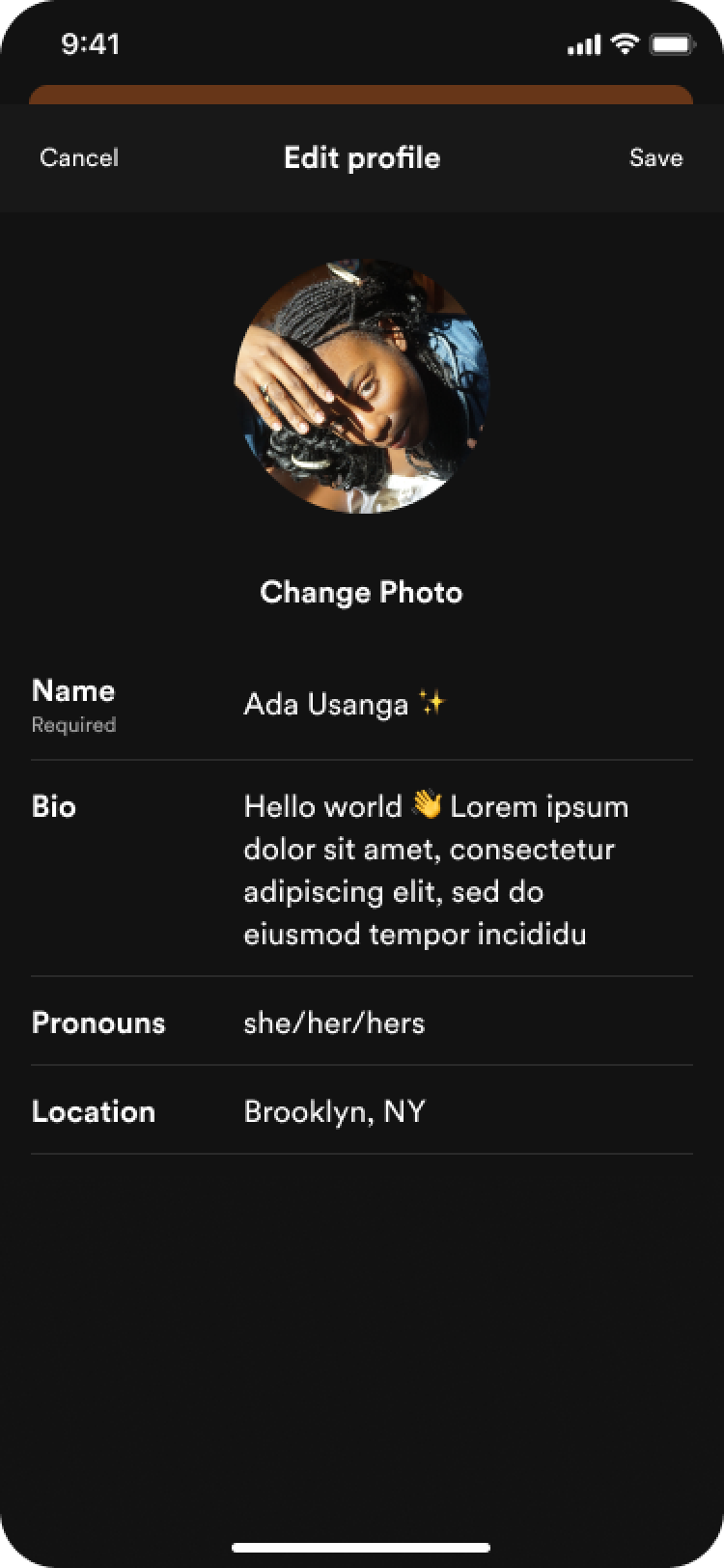
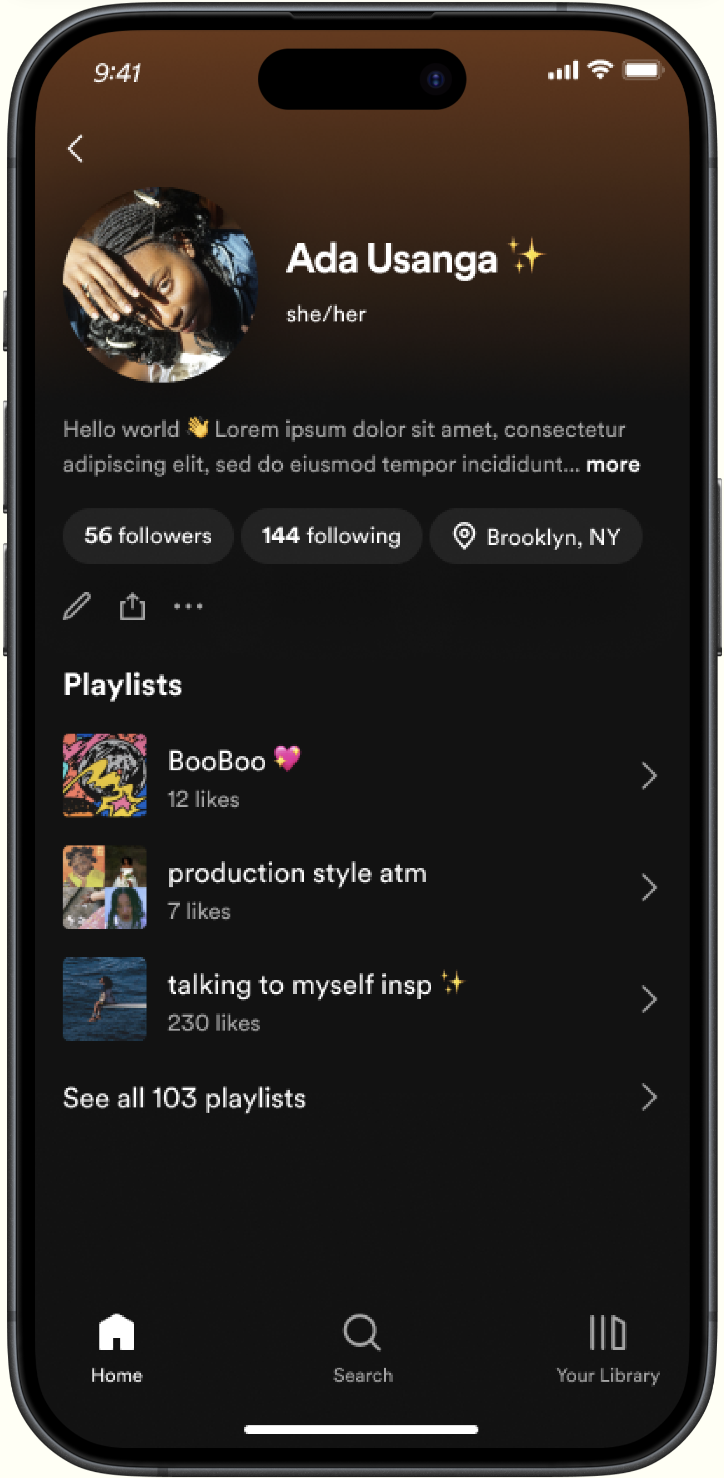
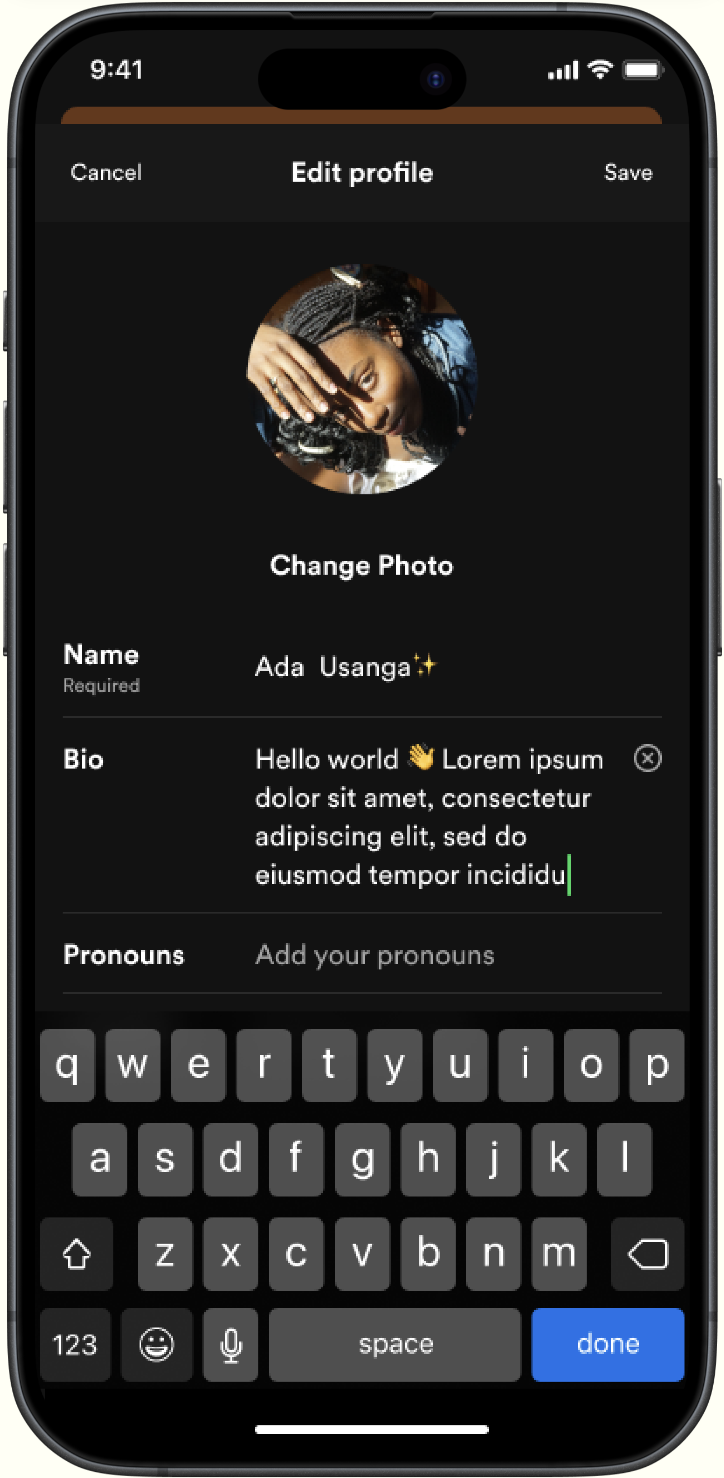
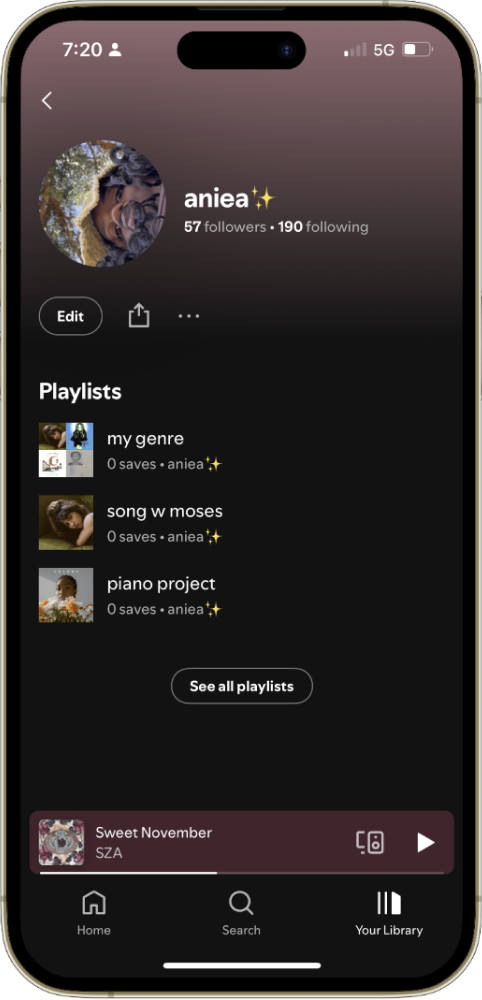
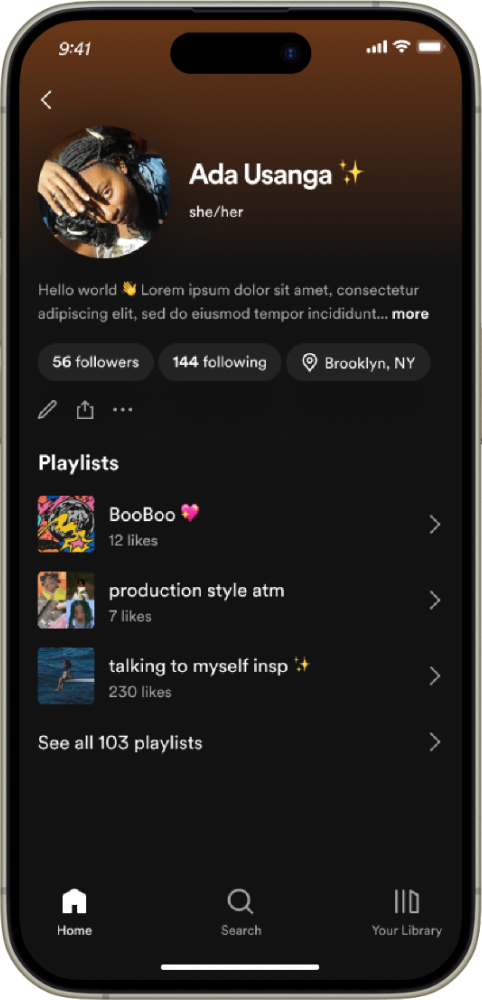
Brilliant basics introduces a full suite of essential details to the profile: bio, pronouns, & location
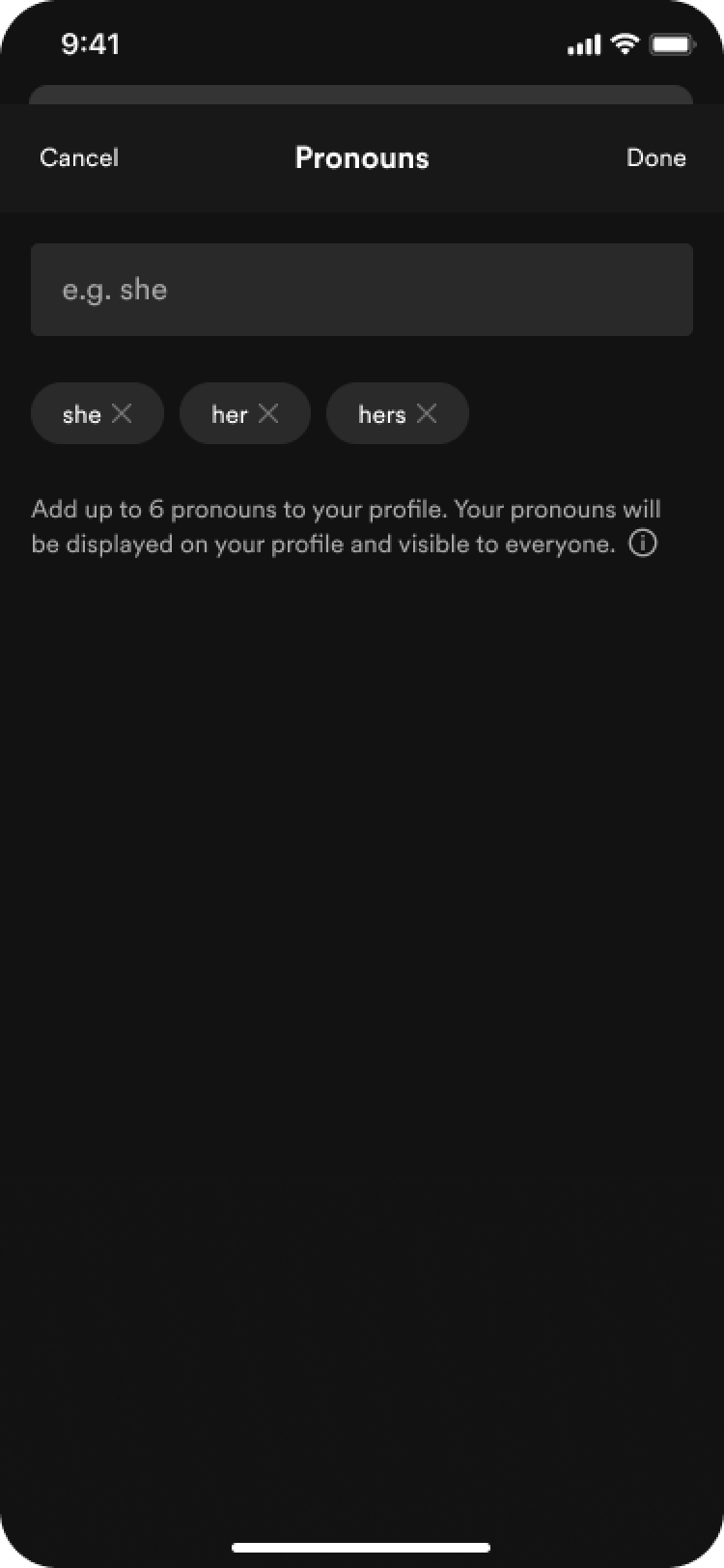
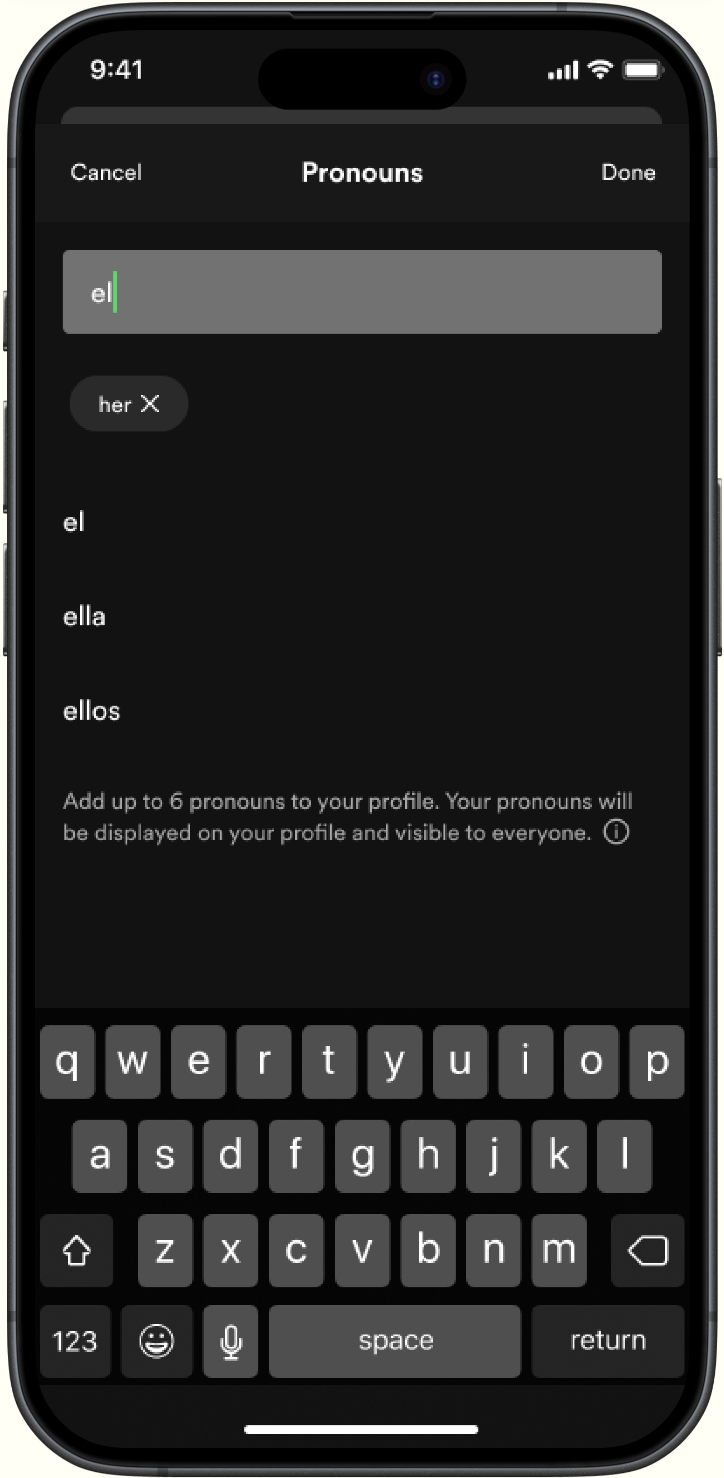
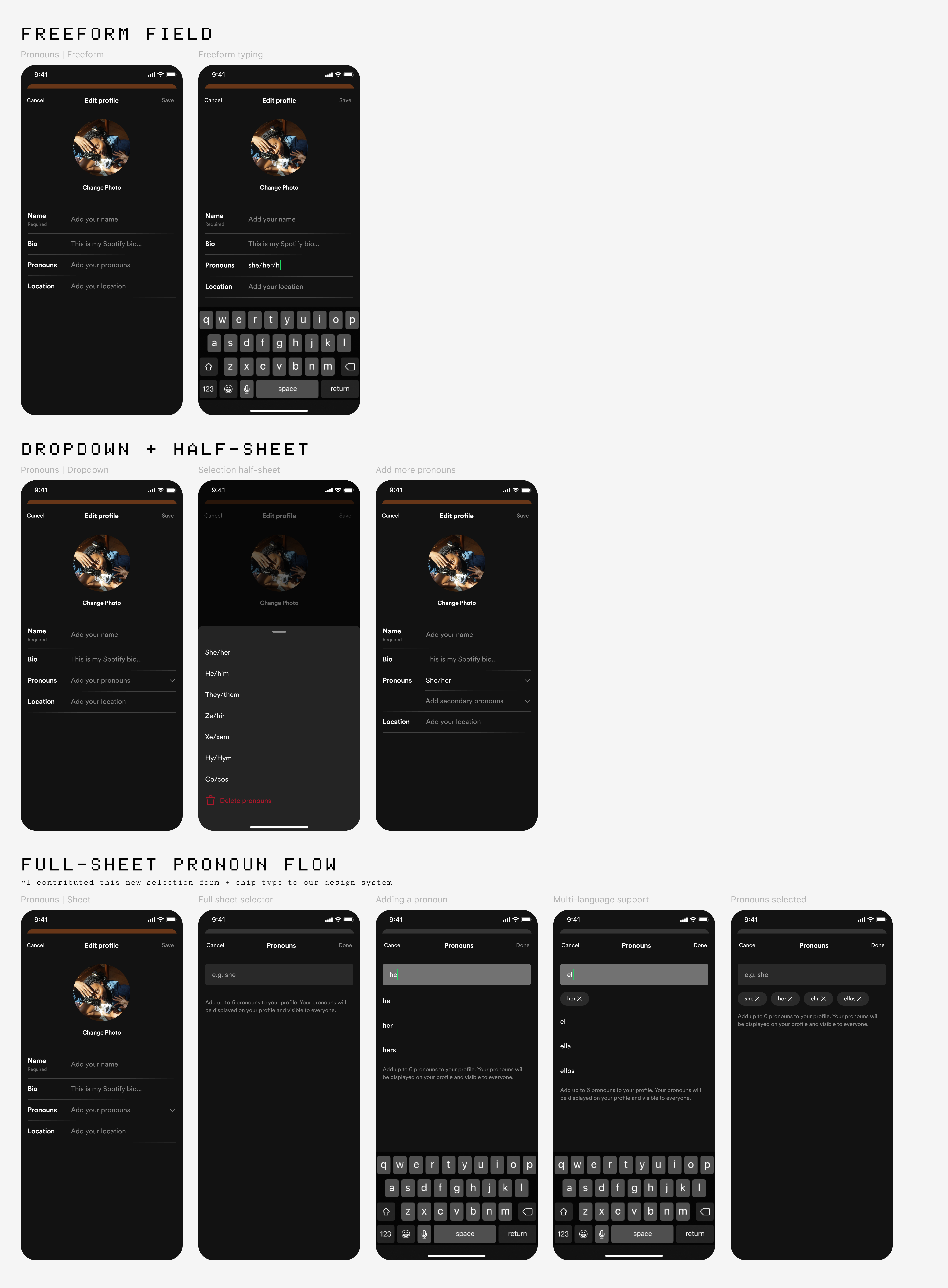
'Pronouns' are built upon a multi-select edit sheet, a component I introduced to our design system to support the flexibility necessarily to properly represent such
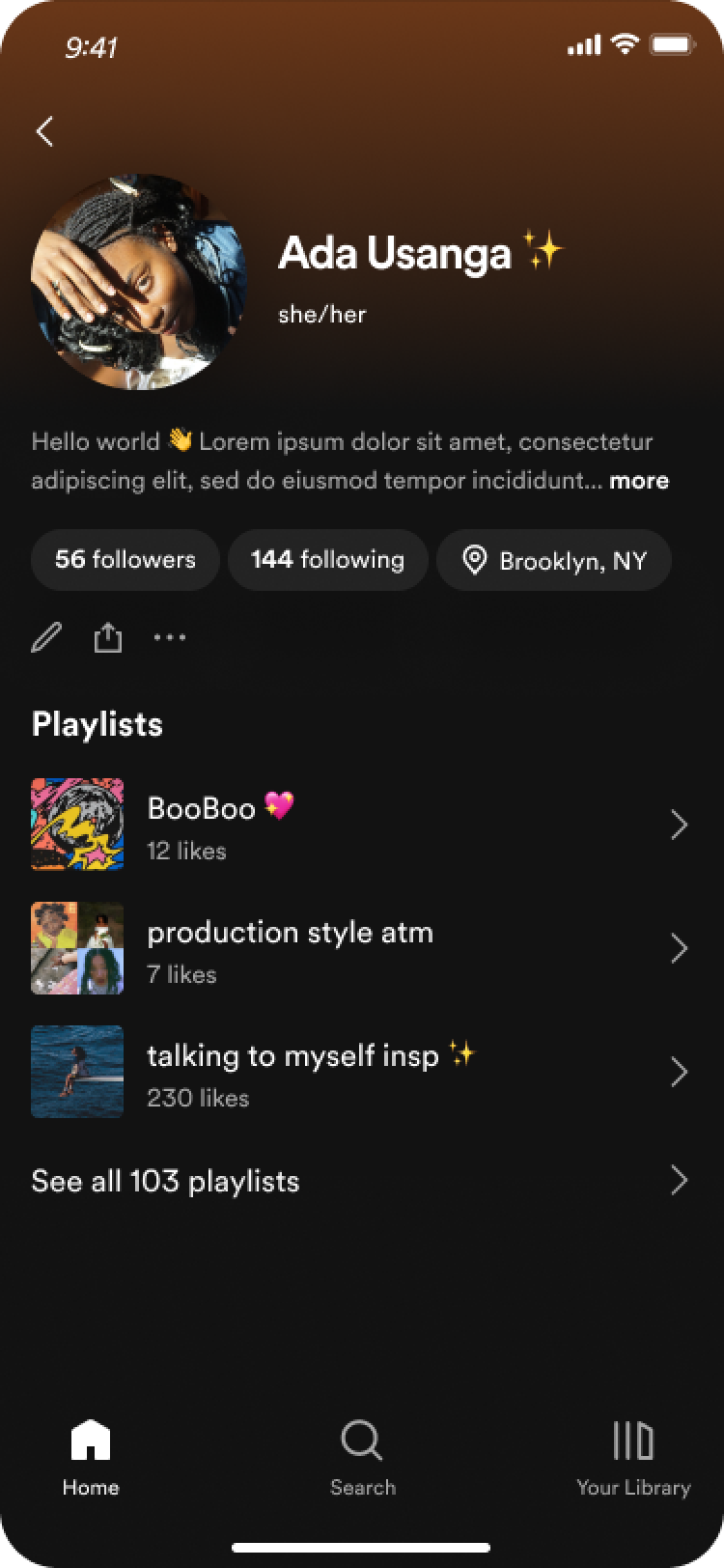
We also dedicated energy to rethinking the profile header, prioritizing meaningful identifiers, and reducing the importance of performative metrics, like follower count
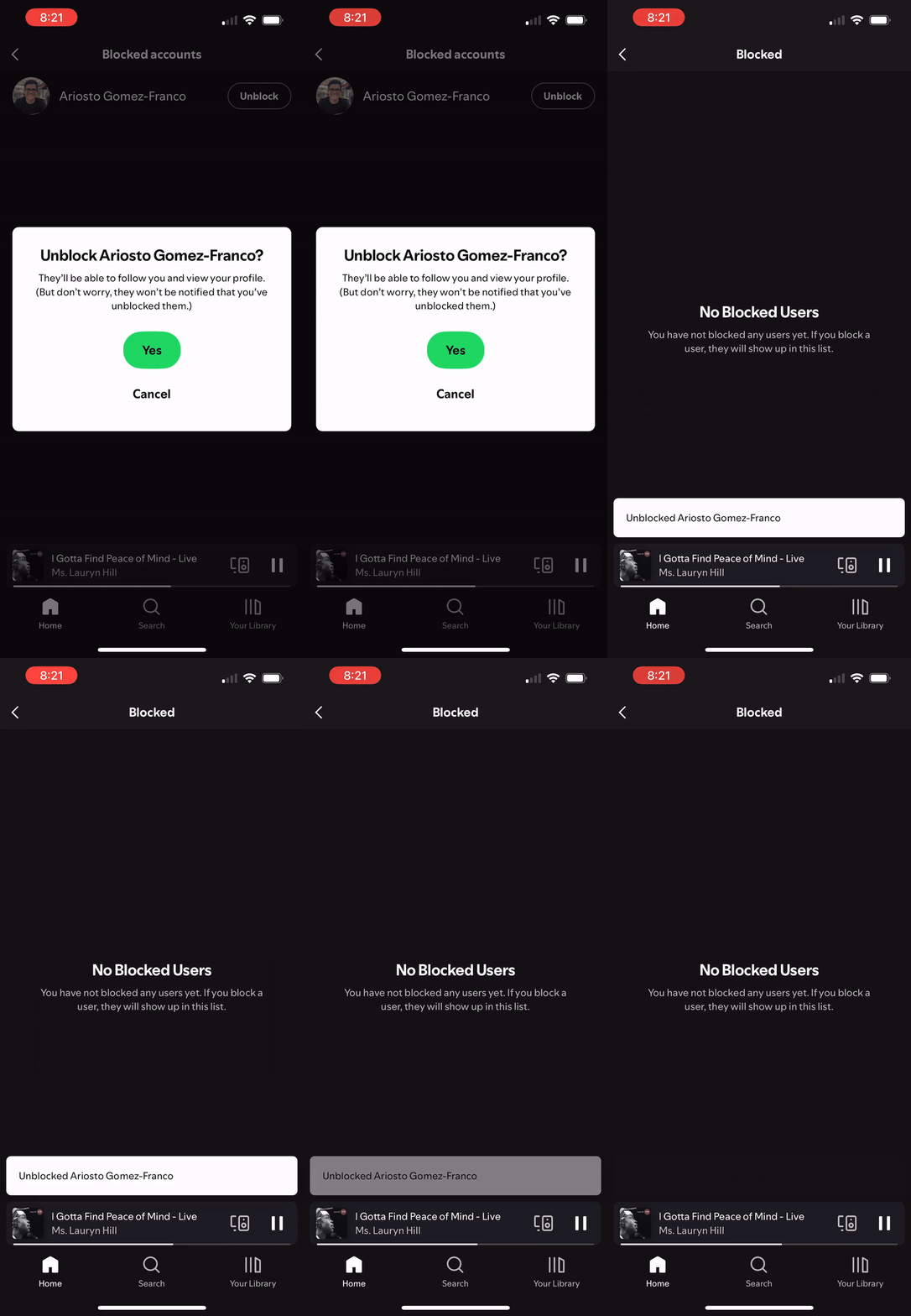
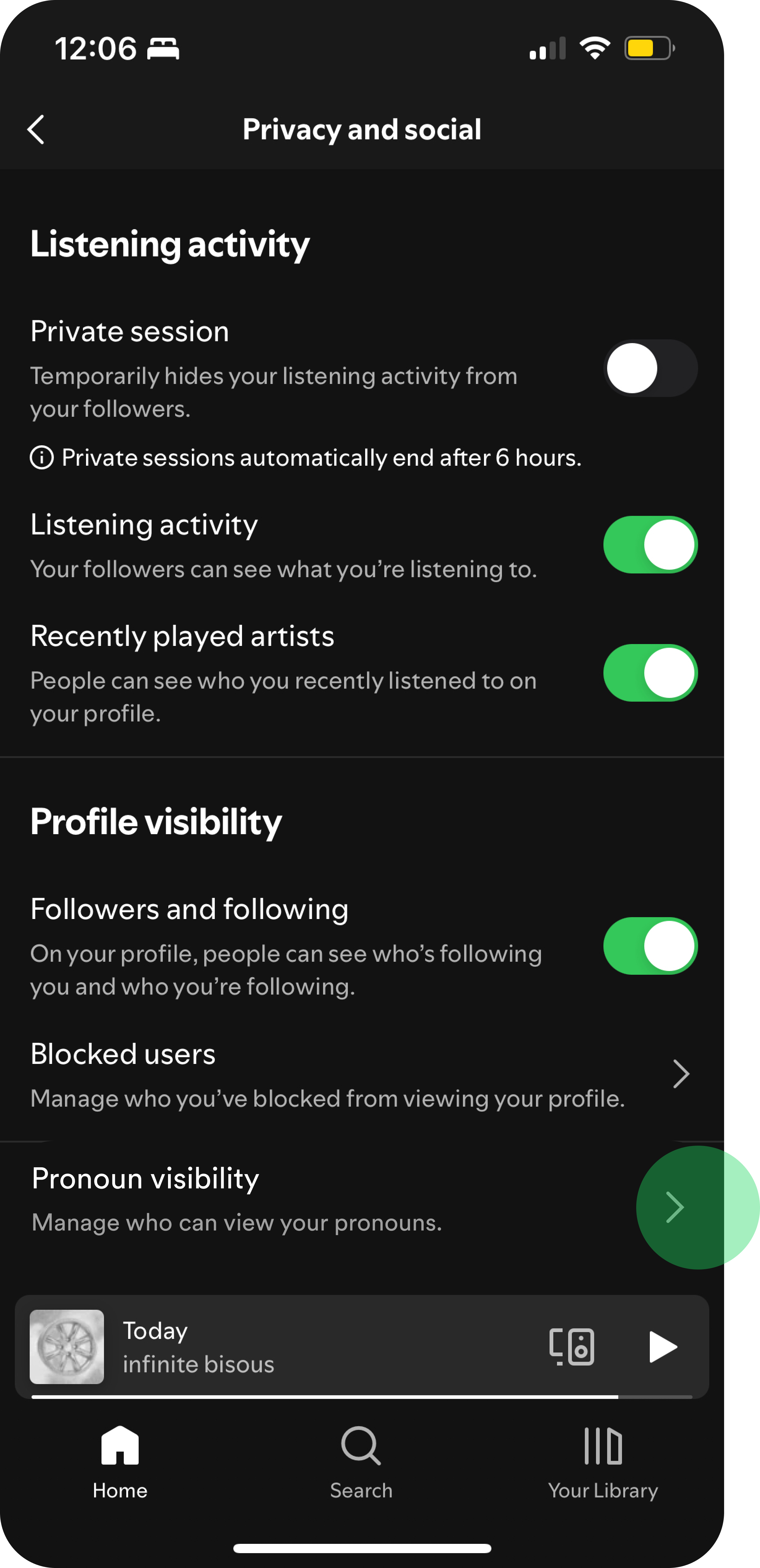
In anticipation of the traffic we expect future features will bring to the profile, we've improved privacy controls maintain user safety and comfort
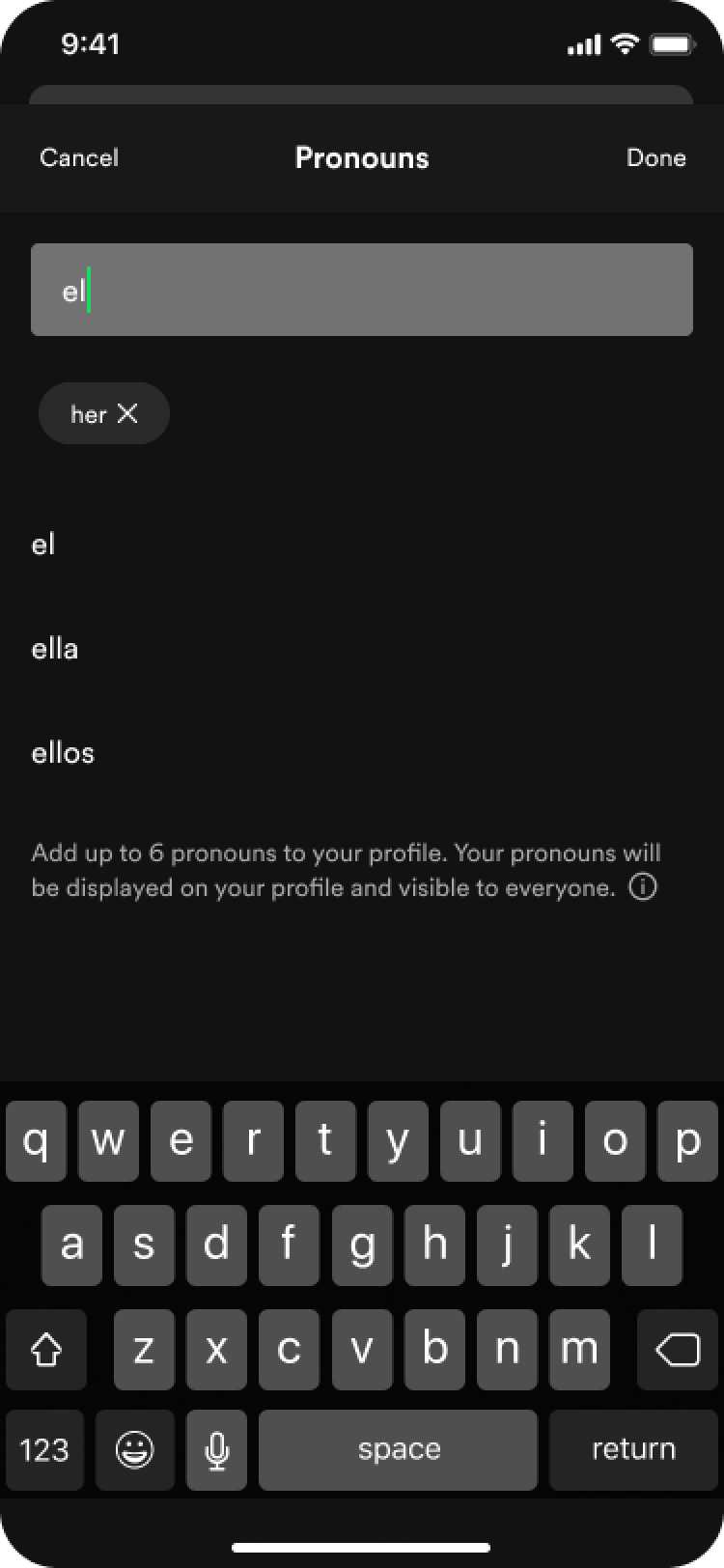
Any combination of up to 6 pronouns can be added to the profile in any of the supported languages
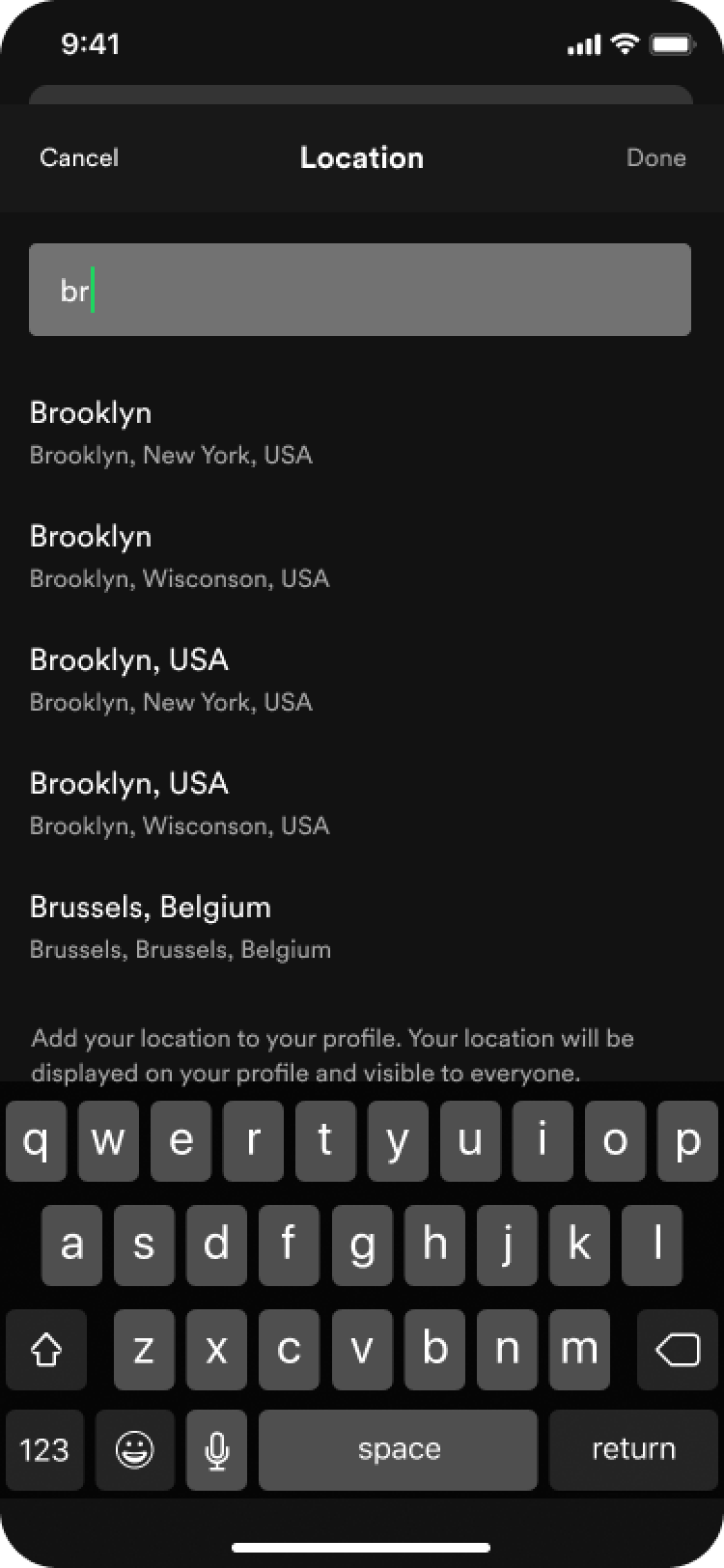
City & country can be added to the profile, linking to events in the area when tapped
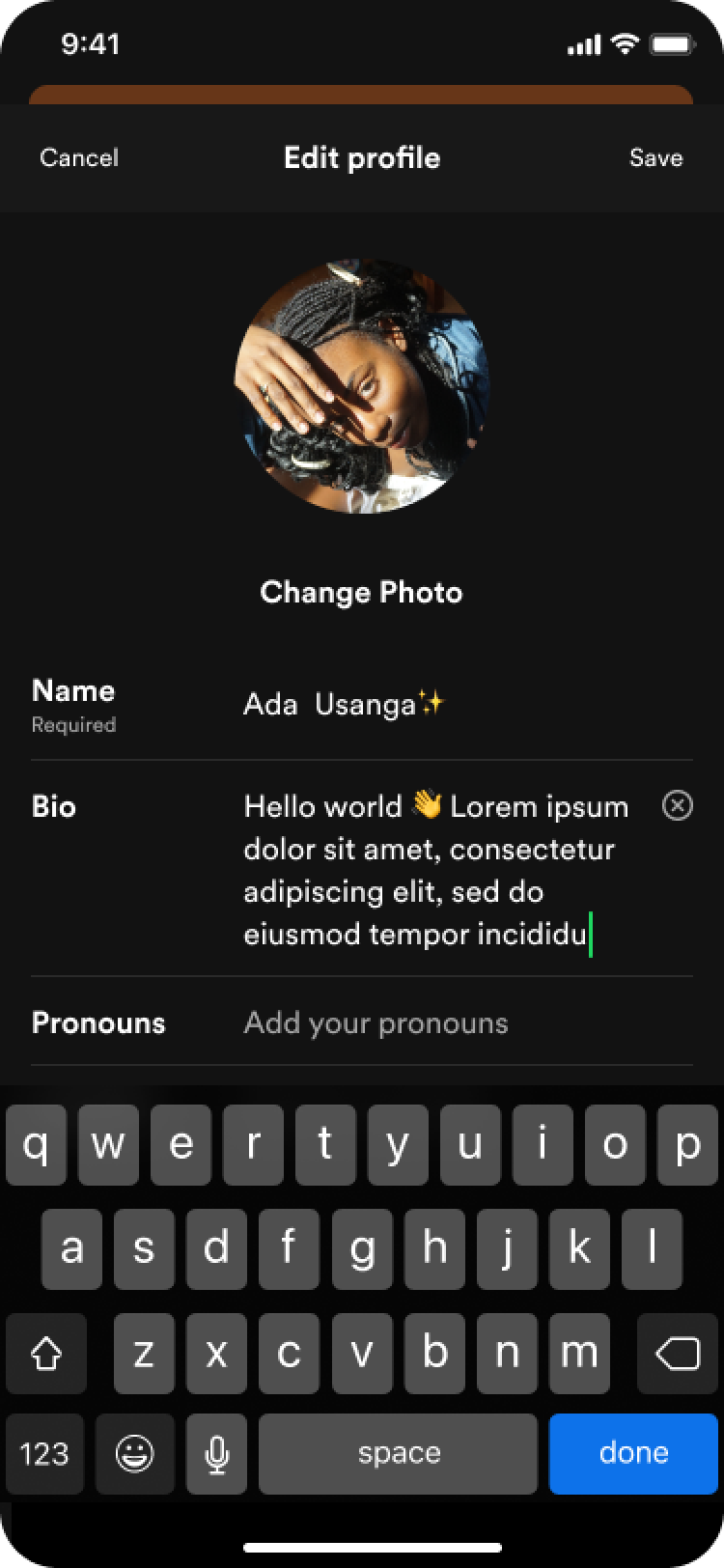
Users can add a biography to the profile, adding a deeply personal touch that can be used to convey facets of the identity unexpressed by the present content
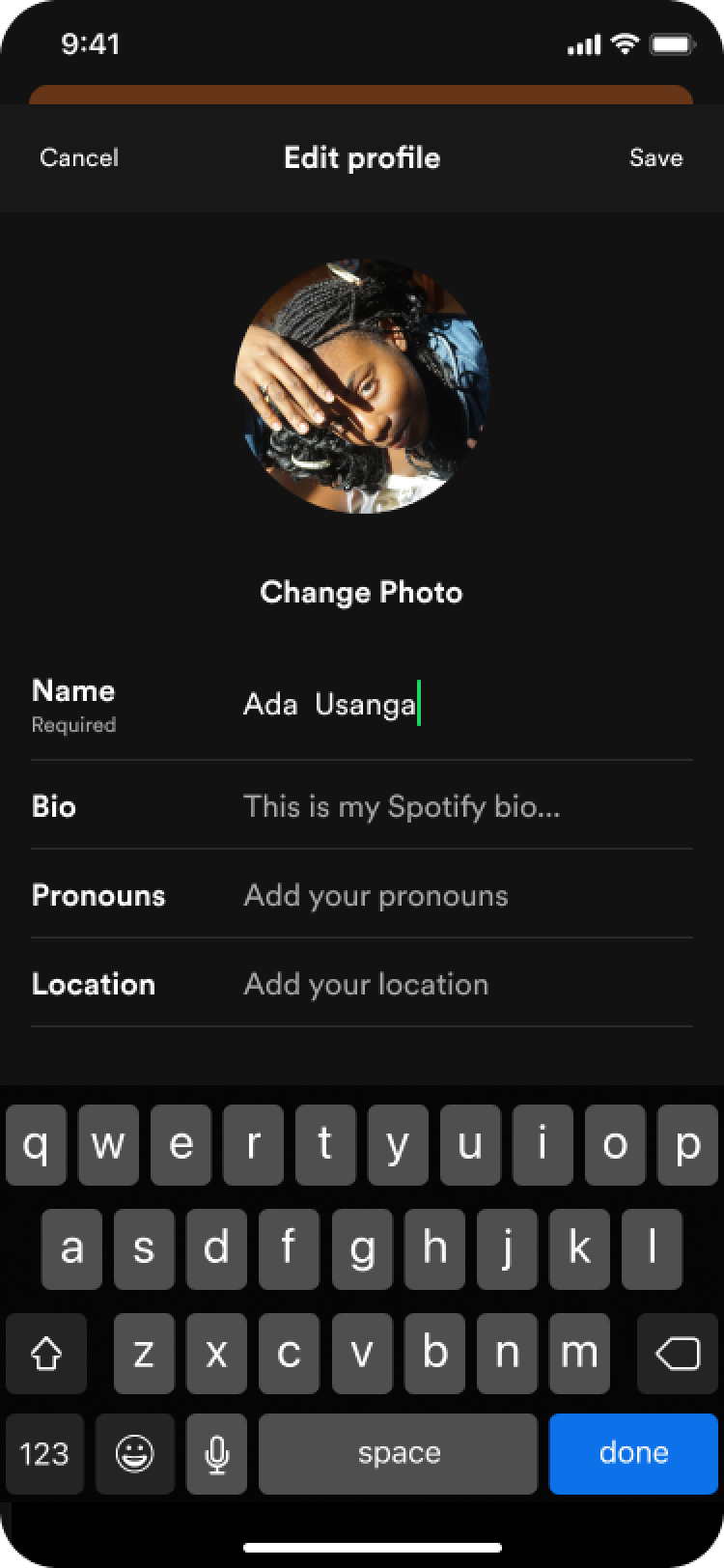
Free-form text, like the name & bio can be edited directly from the edit surface. My team was also exploring the idea of adding unique usernames to improve user discoverability
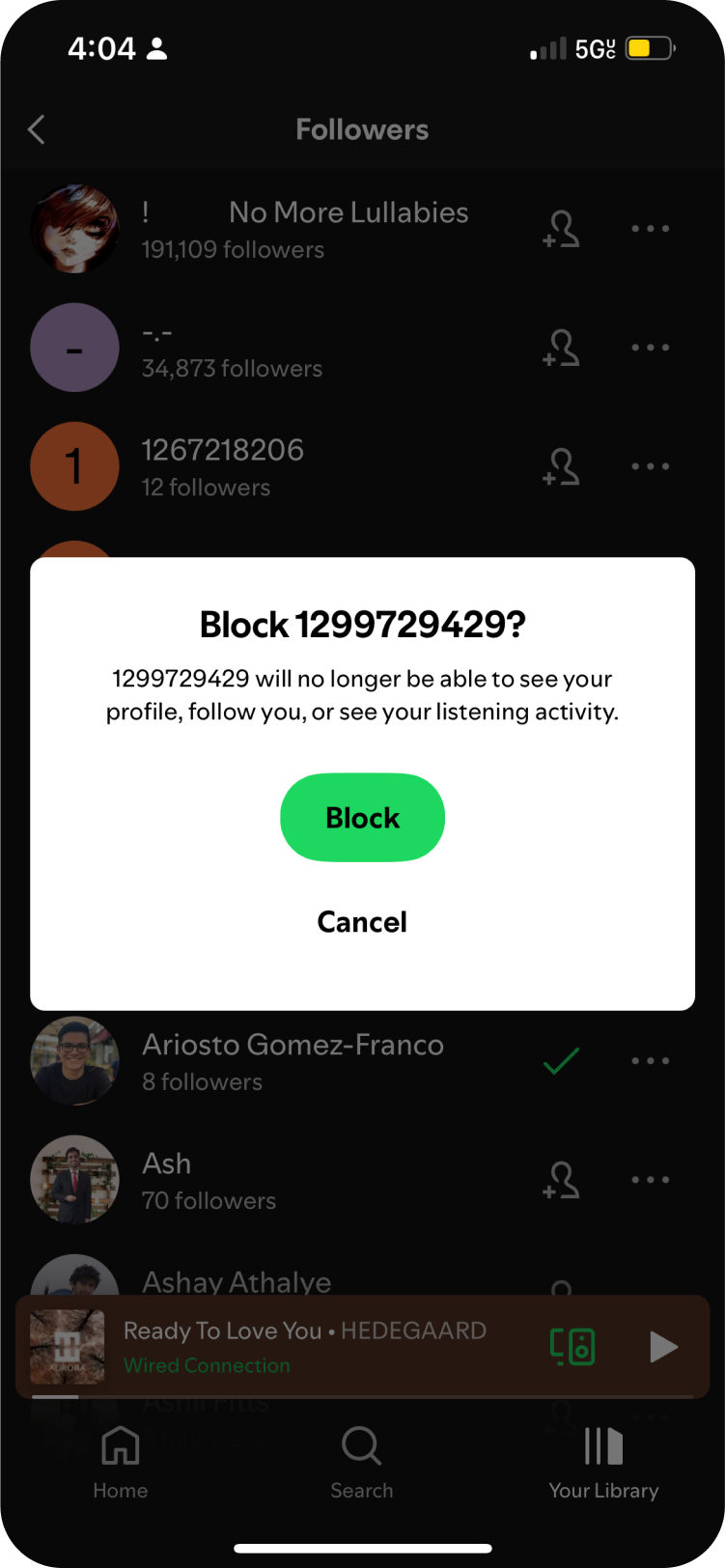
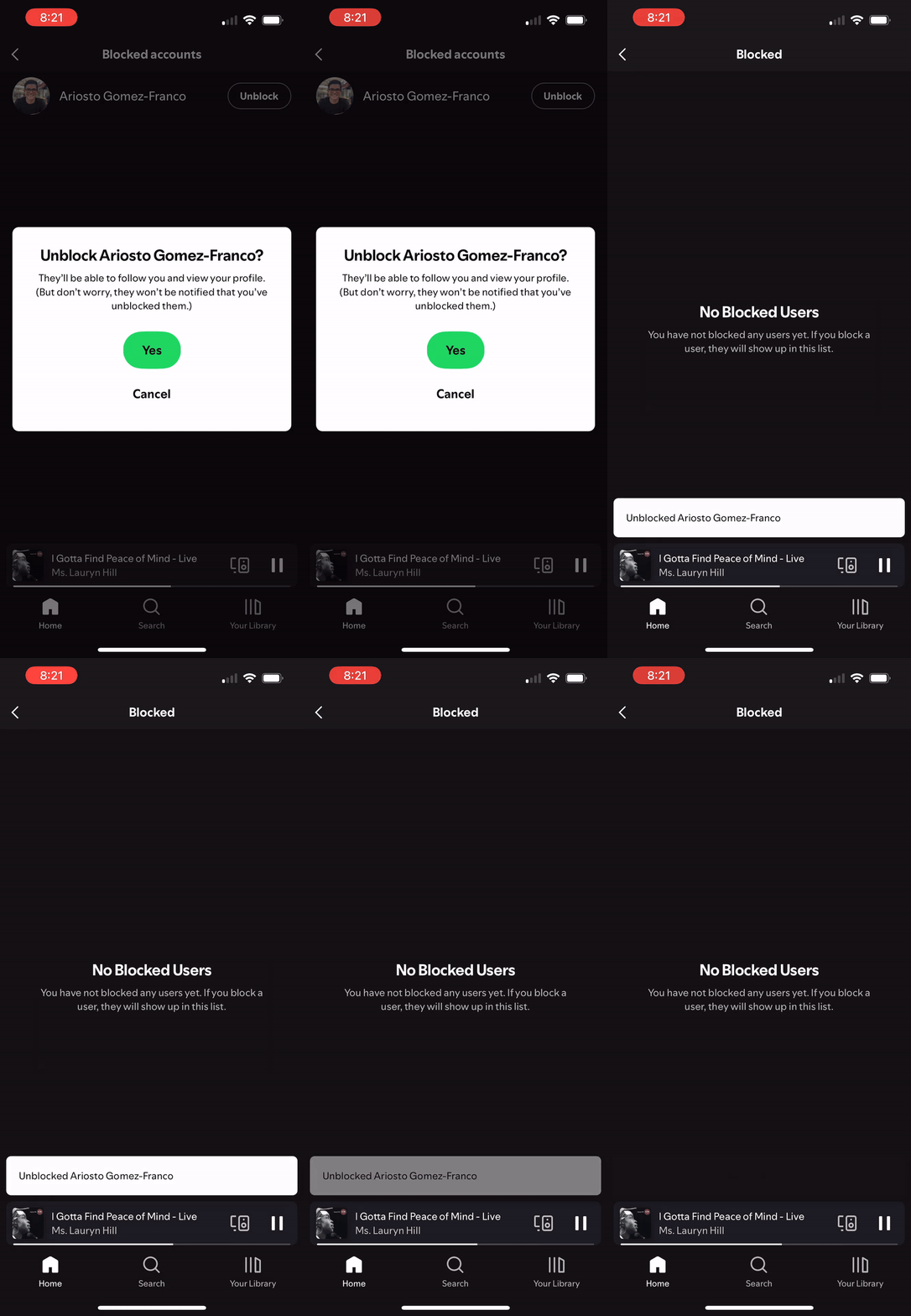
Users can now block other users, essential for protecting privacy for facets of identity that may not be universally public (e.g. a user exploring their sexuality via podcasts who doesn't want their mom to know)
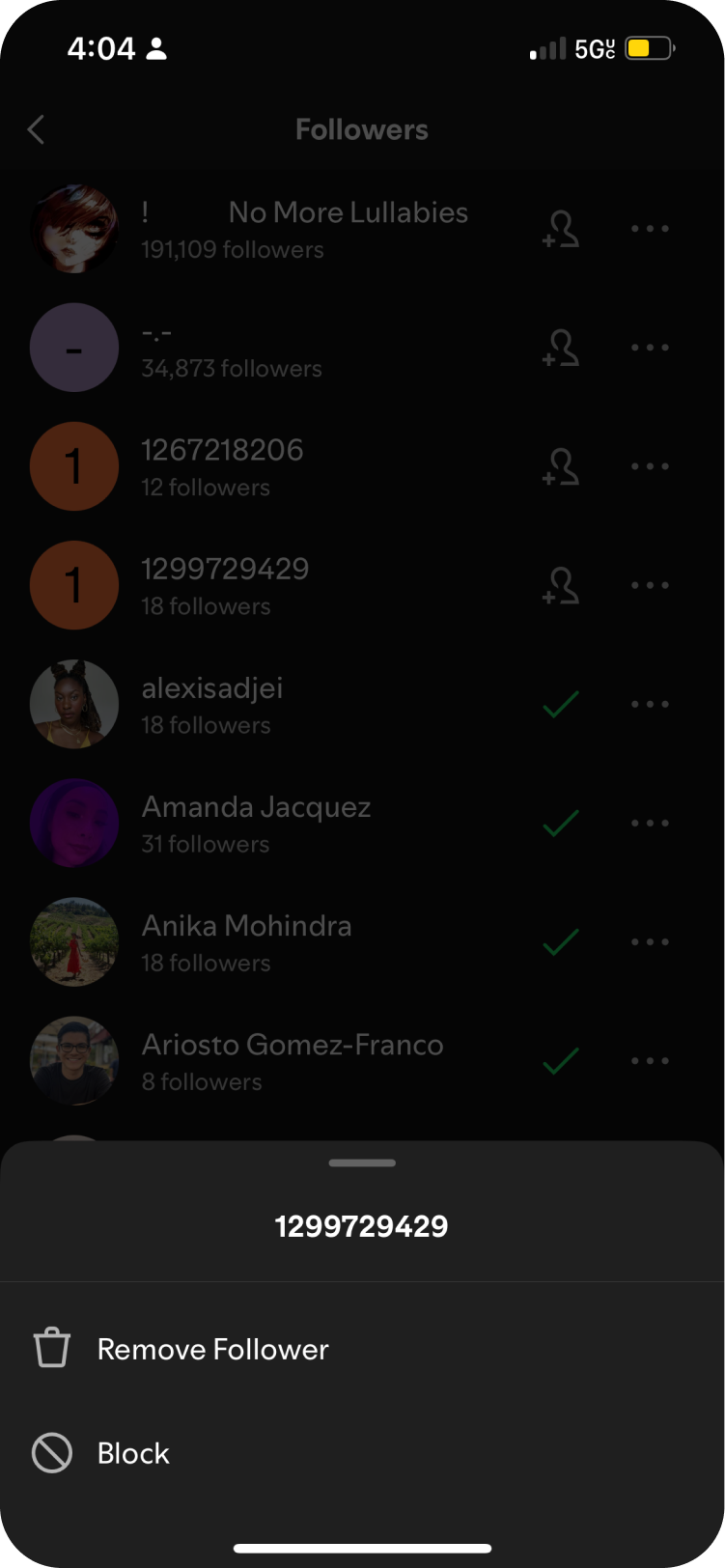
Users can now also remove followers they no longer perceive as relevant/current, maintaining their listening privacy without introducing the more severe connotations of a block


Users perceive the current profile content as a poor representation of their identity, featuring few details & hardly any expressive content. As a result, users find little relevance in engaging with or sharing the surface.
The content on profile is auto-populated from recent activity (creating playlists, following artists). Given the lack of control, users feel worried that their profile could misrepresent their tastes & interests to their followers.
If a user is uninterested in blindly exploring another's playlists, disrupting their current listening session, there is no real value or opportunity in visiting another's user profile.
We worked with UXR to set up a study exploring user expectations of the profile. Users were given a blank profile, alongside a set of potential features & asked to rank the top 10 features they believed the profile should include. While there was a range of reactions to our more exploratory features, consistent amongst our testers was an perception of basic descriptive features as essential.
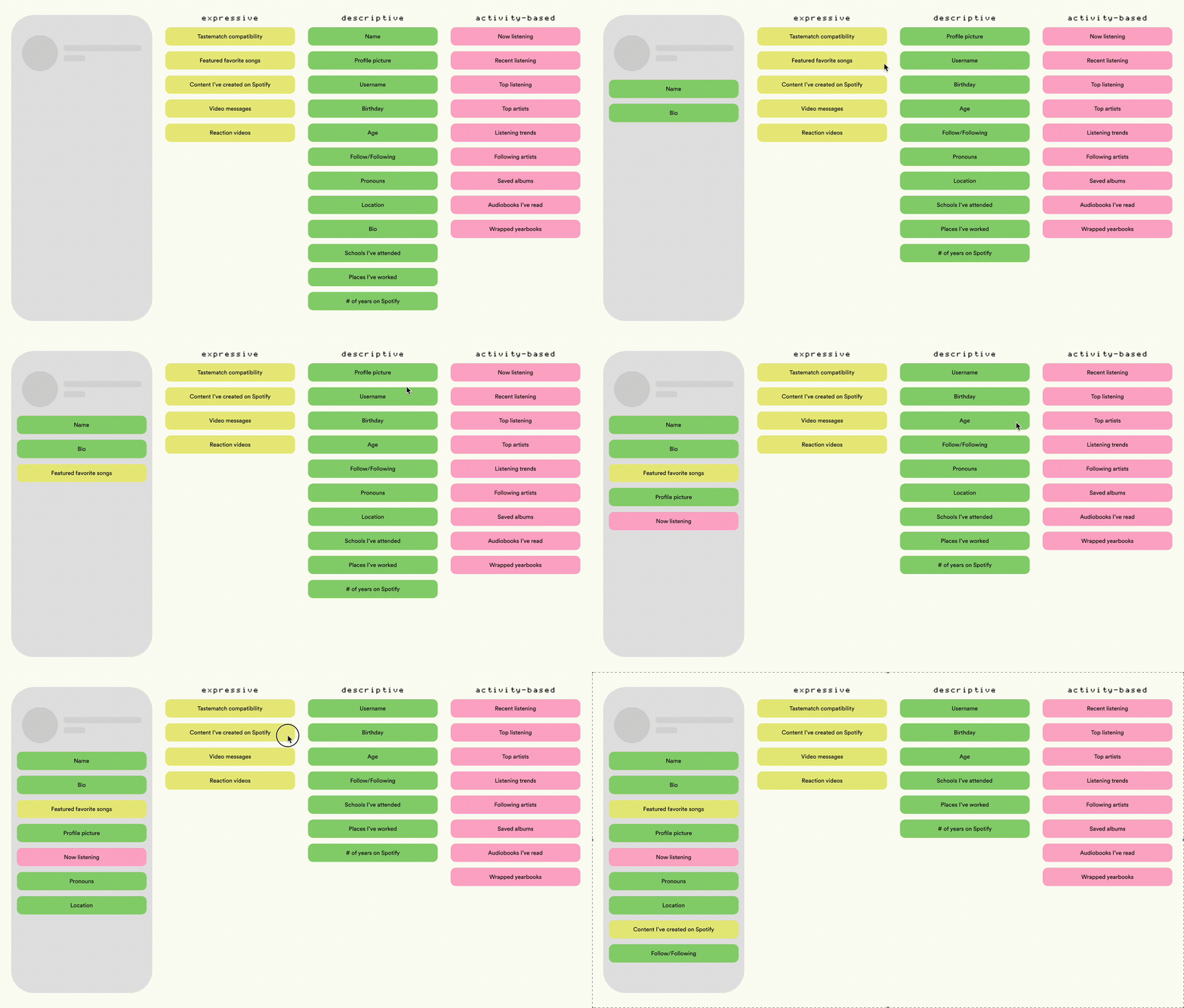
* demo is representative, displaying methods, not data
+
pronouns
+
location
+
user biographies
+
deprioritized follow count
+
improved privacy controls


Does the language have gendered pronouns?
Does this community value pronouns as a meaningful expression of identity?
Would publicly displayed pronouns excessively endanger users who opt in?
How do we navigate in countries where displaying pronouns may result in a violation of the law?
privacy changes
The privacy changes were implemented in our very first wave of development, prioritizing security of the user profile before venturing into introducing additional identifying information
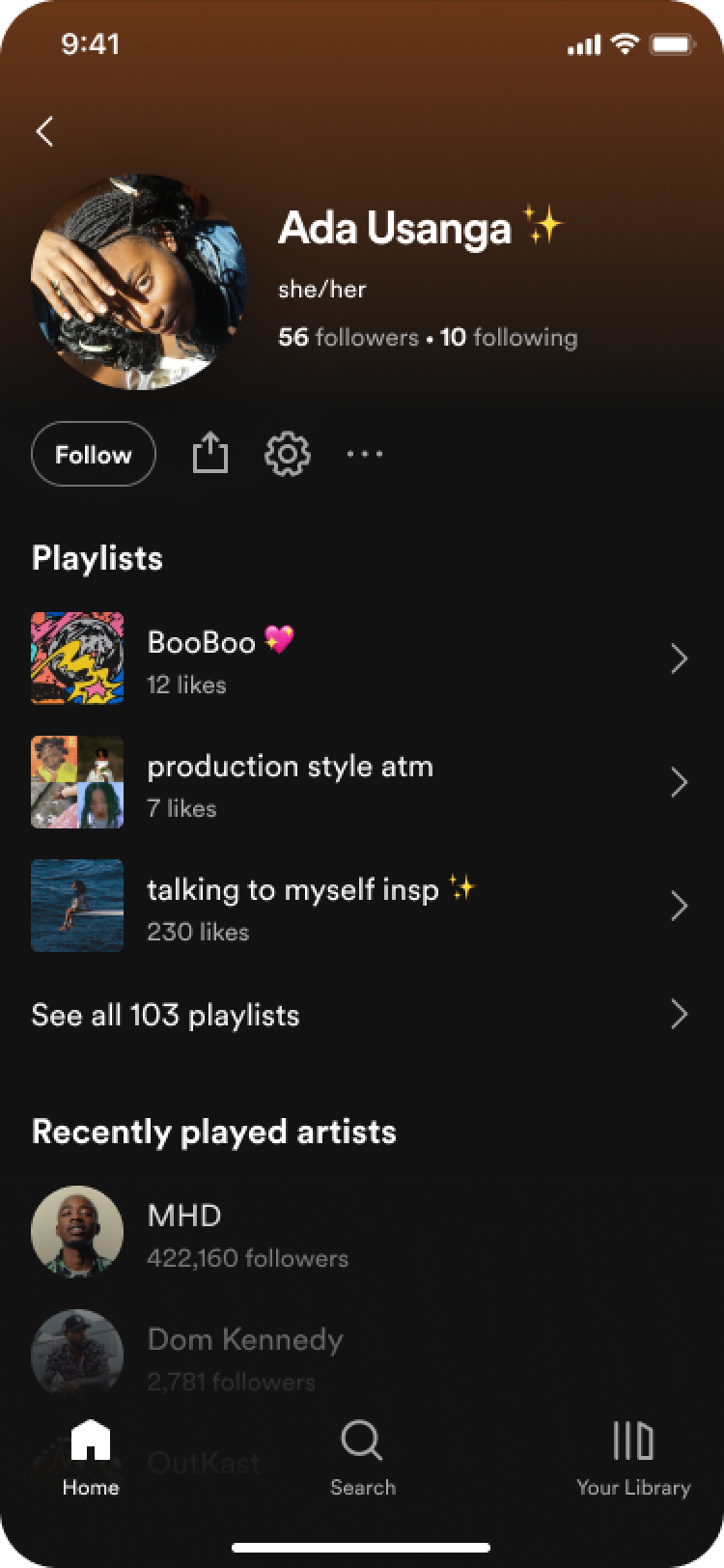
+ pronouns
The next priority is pronouns, recognizing such as a meaningful expression of identity that’s lightweight to implement and important to support
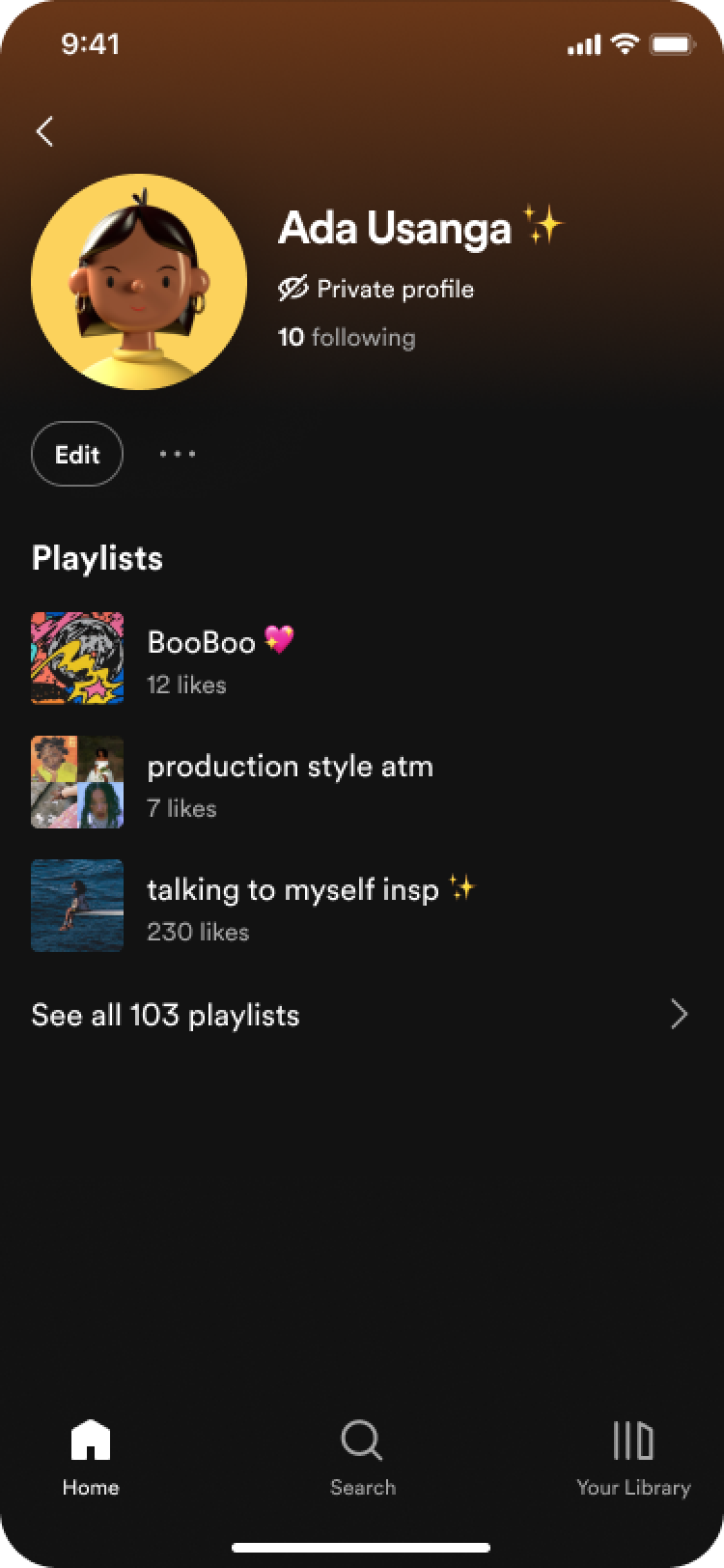
children's account
Spotify hopes to reduce the impact of child listeners on parental taste profiles by introducing same-device children’s accounts
Such calls for the generation of a profile for account management, which will be kept private & omit identifying details to preserve safety
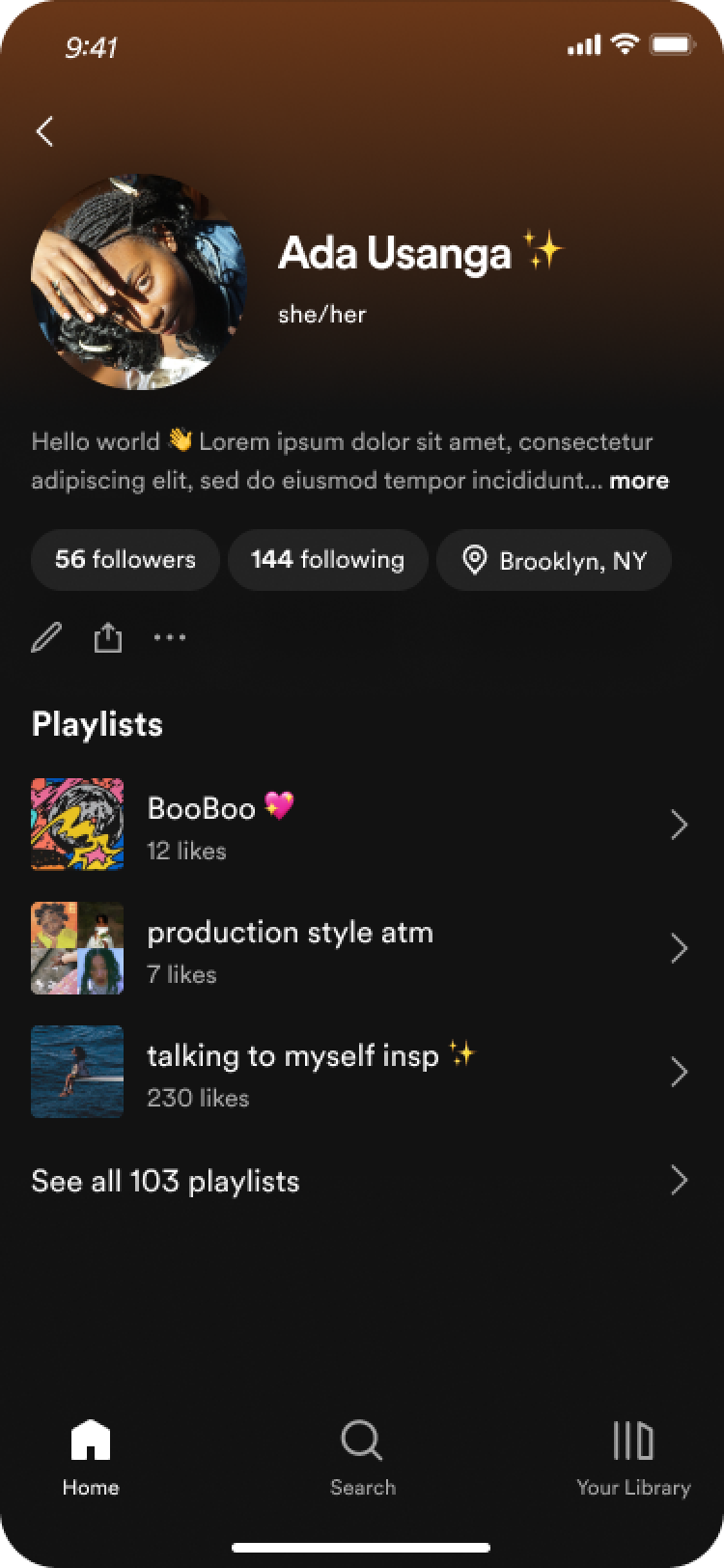
+ all details
My team is currently working with trust & safety to ensure location complies with safety standards prior to releasing the feature
Bios are scheduled for development late 2024, once the moderation team is stood up for UGC
I was responsible for the UX/UI of this project, collaborating with localization, trust & safety, and UXW to ensure that our designs:
1. Appropriately capture & communicate the nuance of gender identity
2. Maintain the safety and privacy of our users
3. Comply with legislation across countries of operation
I shipped production-ready designs to the engineering team, and supported the continual design needs throughout the implementation process.
The privacy phase of this work (remove follower, block list, etc.) is live within the current version of Spotify.
The other features (pronouns, details, bio) are phased to be released throughout 2024.
Isabelle Pereira • Product Manager
Chris Doyle • Engineering Manager
Mercedes Krimm • Localization
Mine Miralay • UX Writing
Gonzalo Campos • SWE
Jessica Arruda • SWE
UX/UI in Figma
Prototyping in Figma
Design thinking
User research
XFN collaboration